Premium for 33€/mo foreverFOUNDING 100Claim my spot

— Alérgenos IA / Compliance UE

Allergens Under Control 🛡️

AI-assisted allergen suggestions across the 14 EU categories, with clear icons and human review before publication. The restaurant remains responsible for ingredients, cross-contact and final declarations.

— 01 / Coste real

The Real Cost of Allergen Mistakes

In the European Union, Regulation 1169/2011 requires food businesses to provide information about 14 allergen categories for non-prepacked food. Accurate information also matters because an incorrect declaration can put an allergic guest at serious risk.

Manual allergen management becomes harder as menus, recipes and suppliers change. Teams need current ingredient records, a way to consider hidden sources, and a review process whenever a dish changes.

IAMenu uses culinary context to suggest likely allergens from the dish name, category and listed ingredients. These suggestions are a reviewable starting point—not a food-safety inspection or a substitute for supplier and kitchen information.

— 02 / Cómo funciona

How AI Allergen Detection Works

01

Deep Contextual Analysis

When you create or edit a product, our "Super Chef" AI analyzes the dish name, listed ingredients, category (Pizzas, Seafood, Desserts), and subcategory. This context allows it to infer allergens that a keyword-based system would never catch.
02

Reviewable Suggestions

Super Chef prepares likely allergen suggestions and displays the relevant menu icons. Staff review the result against the recipe, supplier information and cross-contact procedures.

03

Full Chef Control

You always have the final word. You can confirm, modify, or dismiss the AI suggestions. Once you mark an allergen as "reviewed", the AI respects your decision and will not overwrite it in future updates.

How does it work?

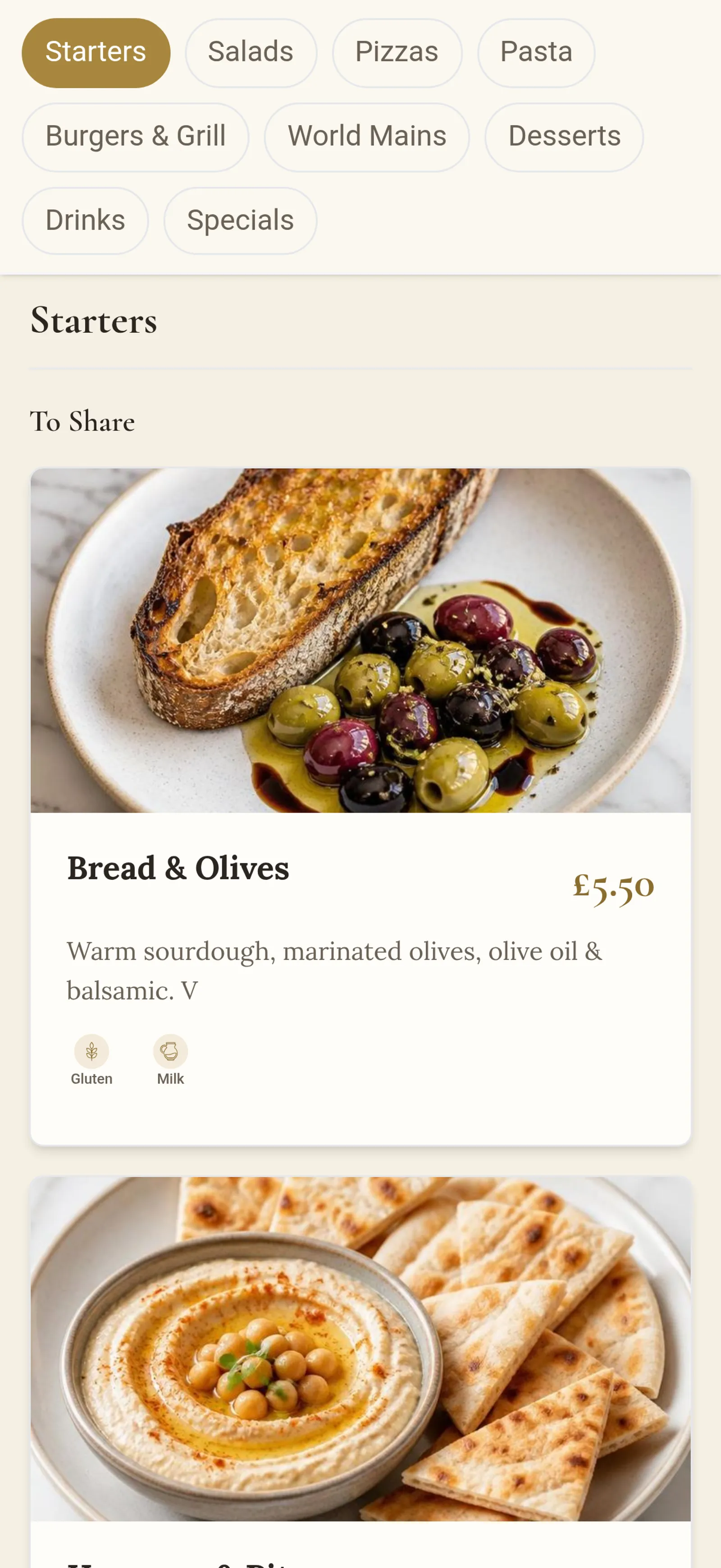
Describe the dish and its ingredients. The AI assistant suggests likely allergens—such as gluten and milk in a pizza with wheat flour and cheese—for the restaurant to review.

The 14 EU allergen categories IAMenu can suggest:

Gluten
Crustaceans
Eggs
Fish
Peanuts
Soybeans
Milk
Tree nuts
Celery
Mustard
Sesame
Sulfites
Lupins
Mollusks

— 03 / En números

Numbers That Matter

14 allergens

EU categories available for review

Human review

Restaurant approval before publication

Editable

Confirm, add or remove a suggestion

Multilingual

Standard labels in supported menu languages

— 04 / Normativa UE

EU Regulation 1169/2011: What You Need to Know

Regulation (EU) No 1169/2011 requires information about the 14 Annex II allergen categories when used in food. Article 44 applies the mandatory allergen information to non-prepacked food, while Member States can set national measures for how it is made available.

The information route and enforcement vary by country. A physical menu, digital menu, written record or supported oral process may form part of the local approach. Check the current national and regional guidance rather than relying on a universal fine or format.

IAMenu can help organize and display reviewed allergen information. It does not certify legal compliance, recipes or cross-contact controls; the food business remains responsible for the final declaration.

Worldwide rules

Menu allergen laws around the world (2026)

Allergen rules differ by jurisdiction and by whether food is packaged, prepacked for direct sale or served loose. The table is an orientation aid, not legal advice; verify the current official guidance for every market where you operate.

IAMenu dashboard showing reviewable suggestions for EU allergen categories
Country / RegionRegulationAllergensWhat food service must do
European UnionRegulation (EU) 1169/201114Mandatory to inform BEFORE the order (printed menu, digital menu or written documentation). In force since December 2014.
SpainEU 1169/2011 + national implementation14The food business must provide the applicable allergen information; consult current national and regional guidance for format and enforcement.
United KingdomFood Information Regulations + Natasha's Law14Natasha's Law applies to prepacked-for-direct-sale food. FSA guidance separately encourages written allergen information for non-prepacked food alongside a conversation.
United StatesFALCPA + FASTER Act9 major allergensFederal FDA allergen labelling primarily covers packaged food; most food sold at retail or food-service establishments without a package is outside those federal requirements. State or local rules may add duties.
CanadaPriority allergens (Health Canada)Priority allergens + gluten sourcesFederal declaration rules cited here focus on most prepackaged food; check provincial, territorial and local food-service requirements.
Australia & New ZealandFSANZ allergen declaration rulesPrescribed allergensRequirements depend on how the food is sold. Food-service businesses should follow current FSANZ and local enforcement guidance.
JapanFood Labelling Standard (CAA)Mandatory and recommended itemsThe scope and named items differ from the EU system; consult current Consumer Affairs Agency guidance for packaged and food-service contexts.

Practical takeaway: a shared reference set can improve consistency, but no software suggestion proves compliance across jurisdictions. Verify recipes, supplier labels, cross-contact controls and the official rules that apply to the business.

Official guidance and detailed guides: FDA: major food allergens·UK FSA: allergen information·Canada·Australia & NZ (PEAL)

— 05 / Casos reales

Example Review Workflows

01

A Restaurant Updating a Recipe

Antes

Before: a recipe change is recorded in the kitchen but the menu declaration can be missed.

Con IAMenu

With IAMenu: staff review the product again, compare suggestions with the new ingredients and publish the approved declaration.

02

A Hotel Managing a Multilingual Buffet

Antes

Before: allergen information lives in separate documents and is difficult for guests and staff to consult.

Con IAMenu

With IAMenu: reviewed allergen icons and labels can appear with each dish in supported menu languages, alongside staff guidance.

03

A Group Maintaining Shared Menu Data

Antes

Before: each location can maintain a separate copy and drift from the approved recipe information.

Con IAMenu

With IAMenu: authorized teams work from centralized menu records and review changes before customer-facing publication.

— 06 / Comparativa

AI Detection vs Manual Management

Criteria
Manual
IAMenu AI
Starting point
Blank checklist
Contextual suggestion
Possible hidden sources
Recipe and supplier review
Contextual suggestion to review
Updates
Manual each time
Operator reviews each material change
Multi-language
Separate translation
Supported menu languages
Monthly cost
Work hours
Included in plan

Note: Always review the detections. The AI is a tool, but the final responsibility lies with the operator.

— 07 / Preguntas

Frequently Asked Questions about AI Allergens

01

Does AI replace the chef in allergen management?

No. AI is an assistance tool that suggests possible categories from available menu context. The food business operator verifies recipes, supplier labels, substitutions and cross-contact, then controls the published information.

02

What about allergens not in the ingredients?

Context can flag a familiar dish for checking, but it cannot establish the actual recipe. A pizza may use a gluten-free base and a paella may not contain every expected seafood ingredient. Treat every inference as a prompt to consult the source information.

03

Does it work with international cuisine?

It can suggest likely categories for dishes from many cuisines, but recipes and product formulations vary. Verify the actual ingredients and supplier documentation instead of assuming every version of a named dish is the same.

04

Can I add allergens that the AI did not detect?

Yes. You can manually mark any allergen. Once marked as "reviewed", the AI will not overwrite it. This is useful for cross-contamination or ingredients that do not appear in the dish name.

05

Are allergens translated to other languages?

IAMenu can prepare labels in the active languages on your plan from its 29-language catalog. Review every safety-critical translation before publishing; an icon or translated term does not replace recipe and cross-contact information.

06

Which plans include allergen suggestions?

The allergen review workflow is available across IAMenu paid plans. Plan access does not change the restaurant's responsibility to verify every suggestion before publication.

07

Is it mandatory to show allergens on a restaurant menu?

In the EU, allergen information for non-prepacked food is mandatory, but Member States can define how it is provided. The UK, US, Canada and Australia/New Zealand have different rules and scopes. Check the current official guidance for the exact food format and location.

08

What are the fines for missing allergen information?

There is no universal penalty. Enforcement and consequences depend on the jurisdiction, applicable offence and facts. Consult the relevant authority or professional adviser for a specific case instead of relying on a generic number.

09

Is a "please ask our staff" sign enough?

It depends on the national rules and the supporting process. UK FSA guidance recommends written information supported by a conversation. A digital menu can make reviewed information accessible, but it does not remove the need for trained staff, recipes, supplier records and cross-contact controls.

10

Does IAMenu certify compliance outside Europe?

No. Allergen rules vary by country, food format and business type. IAMenu provides configurable menu information tools; the operator must verify the applicable law and its own ingredients, recipes and cross-contact procedures.

— Empieza ahora

Review allergen suggestions during your trial

AI suggestions accelerate the first pass; restaurant review remains essential.

Get started now

No credit card required. Allergen detection included.