Commission-Free Restaurant Reservations: Practical Guide 2026
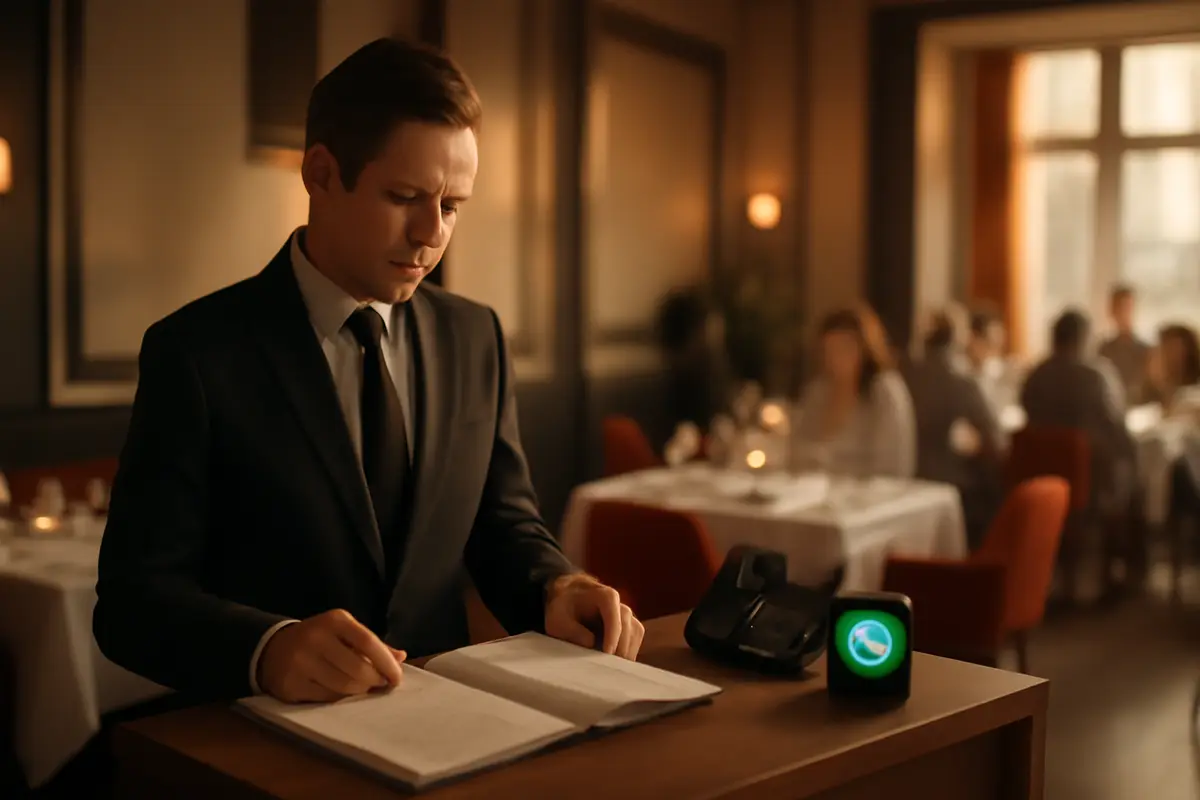
Restaurant commission-free reservations are no longer a “later” option: they are a direct margin lever. If you currently rely on platforms that charge you per cover, each reserved table can leave an invisible bill of €1.5 to €4 per diner, just before service begins. The problem is not just the cost. You also lose control over customer data, it becomes difficult to retain them outside the platform, and often, reservations that come in via phone or WhatsApp end up scattered among notebooks, notes, and messages. The good news is that you can capture direct reservations from your QR menu, automate no-show reminders, and centralize everything in one calendar without complicating operations.
Why per-cover commissions erode your profitability
At first glance, paying for each reserved diner seems manageable. The problem arises when you multiply it over months. A restaurant with 180 reservations per month averaging 2.3 people is seating about 414 diners monthly. With a commission of €2.5 per diner, we are talking about €1,035 per month and €12,420 per year.
That money doesn’t improve your dining room, doesn’t increase the average ticket, and doesn’t reduce team stress. It’s pure repeated acquisition cost on customers who, in many cases, could book directly next time. And that’s the real point: if you’ve already managed to get a customer to know you, it doesn’t make sense to “re-buy” them over and over again.
A quick calculation worth doing today
Multiply your average number of diners reserved per month by the commission you currently pay. Then scale it up to 12 months. If the figure exceeds €6,000 or €10,000 per year, you are no longer looking at a minor expense: you are facing a margin line that you could recover with direct reservations and better operations.
Moreover, platforms tend to concentrate the customer relationship in their own environment. You receive the reservation, yes, but you don’t always build a useful database for future campaigns, special menus, or events. That’s why working on direct reservations is not just about “saving commission”: it’s about regaining commercial ownership.
How to capture direct reservations from the QR menu
The QR menu has a powerful advantage: it appears at a moment of high intent. The customer scans it because they want to see your offer, decide whether to come, repeat, or share the place with someone else. If they find a visible reservation button right there, you eliminate steps and increase conversion.
The practical rule is simple: fewer clicks, more reservations. If the customer has to exit the menu, search for another page, fill out a long form, and wait for a manual response, you will lose part of the demand. On the other hand, if they can reserve in less than a minute, the direct channel starts to compete seriously.
- Reservation button on the front page of the QR menu.
- Available times visible without friction.
- Quick selection of people, date, and time.
- Observation field for allergies, high chairs, or celebrations.
- Immediate confirmation to avoid doubts and duplicate calls.
If you already use an advanced digital menu, you can integrate access to reservations within the same experience. In solutions like digital menu and operations features, the goal is not just to showcase dishes but to convert visits into occupied tables with organized data.
Realistic example: a venue with 1,200 monthly QR scans and a reservation conversion of 2.5% generates 30 direct reservations per month. If the average is 2 people and they previously paid €2 per diner, just that channel already saves €120 monthly in commissions. When the QR is well placed on tables, in the window, on Instagram, and Google, the volume increases quickly.
Centralizing phone, WhatsApp, and QR in one calendar
Many restaurants don’t lose money just because of commissions; they lose it due to chaos. One reservation comes in by phone, another by WhatsApp, another through the Google profile, and another via QR. If each one lives in a different place, classic errors appear: double bookings, poorly calculated gaps, tables blocked “just in case,” and a dining room that operates with partial information.
The most cost-effective operational solution is usually the simplest: a single calendar. It doesn’t matter where the reservation comes from; what matters is that everything ends up in the same view and with the same availability criteria.
- QR reservations entering automatically.
- Phone calls registered by the team in seconds.
- WhatsApp messages converted into formal reservations.
- Room blocks for shifts, events, or capacity changes.
- Customer history visible for future visits.
This has a direct effect on service. The team stops “reconciling” messages and can focus on serving. Additionally, when a regular customer arrives, you can know if they prefer the terrace, if they came with children, or if they usually book at the last minute. That context, when well used, increases satisfaction without adding mental load.
The most underestimated metric
If your manager spends 20 minutes a day reviewing messages and rearranging reservations, you are losing more than 10 hours a month. At an internal cost of €14 per hour, that’s about €140 monthly in operational time, aside from the errors that this disorder can generate in the dining room.
No-show reminders that actually reduce absences
No-shows hurt doubly: you lose the table and disrupt planning. In cities with high demand, an absence can leave €40 to €120 unbilled on a single table depending on the average ticket and number of diners. That’s why any direct reservation strategy must include automatic reminders.
What works best is usually not a complex system, but a clear sequence:
- Immediate confirmation upon making the reservation.
- Reminder 24 hours before with an option to confirm or cancel.
- Second reminder on the same day if the reservation is critical or during peak hours.
- Short and actionable message, without long texts.
In many businesses, just with that automation, it’s possible to cut avoidable absences by 20% to 40%. And there’s an additional benefit: when a customer cancels on time, they return a sellable slot. It’s not as valuable as them coming, but it’s much better than disappearing without notice.
Numerical example: imagine 35 no-shows per month with an average loss of €55 per reservation. That’s €1,925 of potential revenue damage. If reminders reduce those absences by 30%, you recover the equivalent of €577.50 per month.
The key is that the reminder is not just an alert but a small confirmation mechanism. If the customer responds, your forecast improves. If they cancel, you free up the table. If they don’t interact, your team can detect more sensitive reservations and act.
Customer data: why it matters to have it in your hands
When the reservation comes through a third party, the customer “comes,” but they are not always truly incorporated into your ecosystem. In contrast, with a direct reservation, you can build your own, organized, and useful database. It’s not about asking for data just for the sake of it; it’s about collecting the minimum information that improves service and repeat business.
The most profitable fields are usually:
- Name and phone number to confirm and resolve issues.
- Number of people to adjust the dining room and kitchen.
- Preferences or notes like terrace, indoor, or high chair.
- Allergies or restrictions to anticipate service.
- Reason for visit if you want to personalize special moments.
This data allows you to follow up without depending on intermediaries. You can reconnect with customers who have already chosen you, communicate a seasonal menu or tasting, and better segment your actions. If your digital menu is also prepared to inform well about ingredients and restrictions, the leap in experience is notable. This fits especially well with a structure like allergen management in the digital menu, because reservations and service start to speak the same language.
Practical loyalty data
Acquiring a new customer usually costs much more than getting one who has already visited to return. If you manage to get only 15 customers per month to repeat once thanks to your own database and direct communication, with an average ticket of €32, you add €480 extra monthly without having to pay again to acquire them.
How to design a direct reservation flow that converts
It’s not enough to just “put a button.” For direct reservations to work, they need to be designed as if they were a sale. The clearer and shorter the experience, the more reservations you will close.
A recommended flow would be:
- Step 1: choose people, date, and time.
- Step 2: enter name and phone number.
- Step 3: add optional observations.
- Step 4: confirm and receive an automatic message.
Avoid long forms, irrelevant fields, or interfaces poorly adapted to mobile. Remember that a good part of these reservations will come from a small screen, often while the customer is walking, comparing options, or talking to someone else.
It’s also advisable to show simple rules: courtesy time, late policy, or how to cancel. This reduces misunderstandings and protects operations. If you want to review which pieces usually make a difference in a modern implementation, you can see it in use cases for restaurants and hotels.
Quick comparison: a form with 9 fields can convert much worse than one with 4 or 5 well-chosen fields. If your completion rate rises from 48% to 68%, with the same traffic you are capturing 41.6% more completed reservations.
Integrating reservations with menu, allergens, and dining experience
Reservations shouldn’t live in isolation. The more connected they are with the menu and operations, the better everything works. If a customer indicates that they are celiac, vegan, or allergic to nuts, that information cannot be buried in a note. It must be visible and actionable for the dining room and kitchen.
A well-structured system allows you to anticipate service, prepare alternatives, and avoid improvisations. This translates into fewer errors, more customer trust, and less friction during the shift. From a legal and operational standpoint, it’s also important that the information is well documented and presented. In this regard, reviewing criteria for compliance and operational management helps to better structure the process.
When the reservation is linked to an intelligent digital menu, you can even better guide the experience before the customer sits down. This doesn’t mean saturating with commercial messages, but addressing objections: hours, menus, allergens, events, availability, or group policies.
When it makes sense to stay on marketplaces and when to prioritize the direct channel
It’s not necessary to frame it as a total war. In some cases, platforms are still useful for discovery, especially if you are in a tourist area, just opened, or have many gaps during certain times. The mistake is to depend on them for everything and not build your own channel.
A sensible strategy is usually this: use marketplaces for occasional visibility and redirect repeat business to direct reservations. If a customer already knows you, likes your cuisine, and scans your QR at the table or sees your Instagram, there’s no reason for them to book through a commission-based channel again.
The right decision is not “all or nothing”
Think in terms of objectives by channel. For example: marketplace to fill Tuesdays and Wednesdays, and direct reservations for repeat customers, weekends, and traffic from QR, Google, and Instagram. This way, you protect margin where it matters most.
If you are evaluating tools, it’s advisable to compare not only the price but also what real capacity they give you to capture, automate, and retain. In that review, pages like plans and pricing or integrations like connections with other systems help to see the total cost and not just the visible fee.
7-day implementation plan to stop paying for each cover
The transition doesn’t have to be long. An average restaurant can start diverting demand to the direct channel in a week if it focuses on the essentials.
- Day 1: define hours, capacity, shifts, and reservation rules.
- Day 2: activate the form and unified calendar.
- Day 3: place the reservation button on the QR menu, website, and Instagram.
- Day 4: configure confirmations and no-show reminders.
- Day 5: train the team to handle calls and WhatsApp.
- Day 6: review messages, cancellation policy, and texts.
- Day 7: measure conversions, absences, and reservations diverted from the commission channel.
What’s important here is not the initial perfection but starting to capture data and change habits. From there, you adjust. You can move the reservation button, simplify fields, improve messages, and refine shifts. Platforms like iaMenu allow precisely that logic: to unite menu, reservation, and operations in a simple experience for the customer and more controllable for the restaurant.
Reasonable goal for the first month: divert 15% to 30% of the reservations that currently come through third parties or disorganized channels to your own channel. With that first move, you will already see savings in commissions, fewer dining room errors, and better customer traceability.
How to measure if your commission-free reservation system is working
What is not measured is discussed by intuition. To know if your direct reservations are truly improving the business, follow a basic dashboard of indicators over 30 to 90 days.
- % of direct reservations out of the total.
- Commission avoided per month.
- No-show rate before and after reminders.
- Administrative time dedicated to organizing reservations.
- Repeat customers captured in your own database.
- Incidents of double bookings or assignment errors.
With this data, the conversation stops being technological and becomes financial. You are no longer deciding if it’s “cool” to have QR reservations; you are evaluating how much margin you recover, how many hours you free up, and how much commercial control you gain.
If you also want to compare your setup with what the market currently offers in intelligent digital menus, this guide on what the best AI digital menu should have in 2026 may be helpful.
Frequently asked questions
Here are clear answers to the most common questions about direct reservations, commissions, no-shows, and operational management in restaurants.
What are commission-free reservations for restaurants?
They are direct reservations that come through your own channels, such as the website, QR menu, Instagram, Google, phone, or WhatsApp, without paying a per-cover commission to a marketplace. Usually, you only bear the cost of your software, which is typically fixed and predictable.
How much can a restaurant save by avoiding reservation commissions?
It depends on the volume and the commission you pay. If you receive 250 reservations per month for 2 people and pay €2 per diner, the annual cost can exceed €12,000, a figure sufficient to cover software, local campaigns, and operational improvements.
Can reservations be accepted from a QR menu?
Yes. A QR menu can include a visible reservation button on the front page, categories, or the venue's profile so that the customer can reserve in a few steps. This reduces friction and takes advantage of a moment when the customer is already looking at your menu and has real intent.
How are no-shows reduced in direct reservations?
The most effective way is to combine immediate confirmation, automatic reminders via WhatsApp or email, and a clear policy for changes or cancellations. Many restaurants cut absences by 20% to 40% by automating these reminders.
Can I combine reservations from WhatsApp, phone, and QR into one calendar?
Yes, and it is one of the improvements with the most operational impact. Centralizing everything in one calendar avoids double bookings, allows you to see real gaps, and gives the dining room team a single source of truth.
Do I need a new website to have commission-free reservations?
Not necessarily. You can start by inserting the reservation system into your digital menu, on a simple landing page, or even by sharing a direct link on Instagram, Google Business Profile, and WhatsApp.
What customer data should I collect in a reservation?
The basics are name, phone number, date, time, number of people, and observations. If you also collect allergies, table preferences, or the reason for the visit with consent, you improve service and increase repeat business.
Do direct reservations help to sell more?
Yes, because you control communication before the visit and can push the average ticket with menus, pairings, or events. You can also reactivate customers who have already booked with you without paying again to acquire them.
How are allergies or special needs managed in a reservation?
Ideally, allow the customer to indicate them when booking, and ensure that this information reaches the kitchen and dining room clearly. If you also connect the reservation with a well-structured digital menu, you reduce errors and improve compliance.
In summary: moving to direct reservations is not just about avoiding a commission, but about keeping the margin, organizing operations, and building a direct relationship with each customer. If you want to see how to integrate reservations, digital menus, and automation into one system, you can explore the features of iaMenu and assess if they fit with your service.