Multilingual QR Menu for Tourist Areas: Sell More in 54 Languages
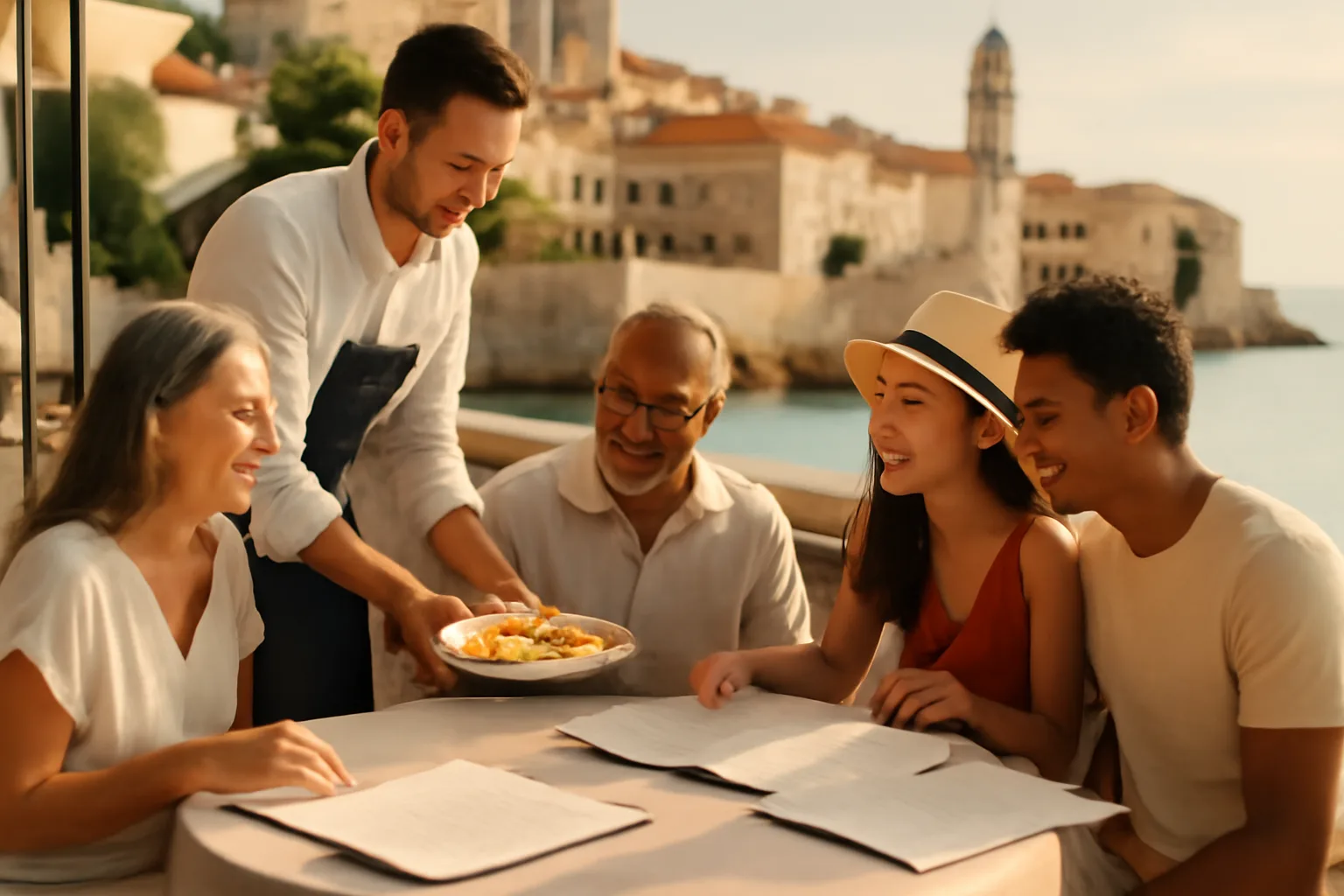
A multilingual QR menu for tourist areas is no longer just a nice extra: it’s a direct sales tool. In coastal areas, islands, and heritage cities, thousands of restaurants continue to operate with menus only in Spanish or, at best, in basic English. The problem is not just about image. It’s pure business: when the customer doesn’t understand what’s in a rice dish, the portion size, or if a sauce is spicy, they order less, hesitate more, and forgo extras they would buy if the menu were clear in their language.
In destinations with high visitor turnover, this friction translates into lower average tickets, more time spent by waitstaff explaining the same things, and more avoidable mistakes. The good news is that today this can be resolved with a well-structured digital menu, accessible via QR code and automatically translated into 54 languages, without having to redo the operation each season.
The invisible loss of a menu only in Spanish
Many restaurateurs see the problem but do not quantify it. If a tourist doesn’t understand the menu, they often resort to safe choices: a pizza, a hamburger, a simple salad, or the most obvious dish with a photo. This reduces the sale of house specialties, products with better margins, and proposals that differentiate the establishment.
Moreover, when the customer is unclear about what they are ordering, they eliminate extras from their decision: half portions versus full, seafood supplements, wine by the glass, side dishes, dessert, or coffee. At the table, confusion almost always lowers spending.
Data that does impact revenue
At a table of 2 people, losing 5 to 12 € due to a lack of understanding of the menu seems small. But with 25 tables a day, the impact rises to 125-300 € daily. In a strong month of the season, we’re talking about 3,750 to 9,000 € that slip away without touching the kitchen or raising prices.
In tourist areas, where a large part of the audience is visiting for the first time, you can’t rely on “they will ask.” Many don’t ask out of embarrassment, haste, or language barriers. They simply order less.
Why tourists buy differently when they understand the menu
The purchasing decision in restaurants is closely linked to clarity. A foreign visitor doesn’t have the local context that a regular customer does. Terms like “fritura,” “pilpil,” “suquet,” “presa,” “zamburiñas,” or “secreto” may sound appealing, but they don’t sell if they aren’t explained.
When the description appears in their language, the customer better understands three key things: what the dish is, what it contains, and why it’s worth that price. That’s where the conversion of special dishes, seasonal recommendations, and premium products increases.
- Starters that were previously not ordered become shared.
- Drinks gain weight when there are pairings or clear suggestions.
- Desserts increase if the customer knows what they are made of.
- Local specialties stop seeming “risky.”
With a digital menu, you can also add photos, icons, recommendations, and tags without overwhelming the design. If you want to see how this type of experience is structured, in the features of a digital menu it clearly shows how technology helps sell better, not just “display a menu.”
Realistic example: a German couple sees “arroz del senyoret” on a menu only in Spanish and chooses two simple dishes out of caution. If they read in German “peeled seafood rice, intense, for sharing, recommended for 2,” they are much more likely to add an appetizer, a bottle of wine, and a dessert.
Multilingual QR menu for tourist areas: a real competitive advantage
A multilingual QR menu for tourist areas turns an operational weakness into a competitive advantage. It’s not just about translating words. It’s about ensuring that each table receives the correct information instantly, without relying on the language skills of the front-of-house team.
This is especially useful in businesses with high foot traffic: terraces by the sea, restaurants in historic centers, beach clubs, hotels, bars near ports, or monumental areas. These are contexts where staff are often pressed for time, and the menu must work on its own.
The ability to offer up to 54 languages greatly expands coverage. Not just English. Also French, German, Italian, Dutch, Portuguese, Polish, Romanian, and other frequent markets in Spanish destinations. In practice, this reduces repetitive questions, increases confidence, and improves the experience from the first scan.
The cost of not adapting
Printing physical menus in 4 or 5 languages usually involves translation, layout, corrections, and reprinting every time prices or dishes change. With a QR menu, a change of 1 ingredient or 1 price is updated in minutes and reflected in all languages without printing costs.
54 languages: from “having translation” to truly meeting demand
One of the most common mistakes is thinking that having Spanish and English is enough. In many tourist destinations, it’s not. The French visitor expects French. The German appreciates German. The Italian, Dutch, or Portuguese react better when information comes in their native language, especially if there are local products, fish, perfectly cooked meats, or allergen issues.
A menu in 54 languages doesn’t mean that all will be used equally, but it does mean that the restaurant is prepared for peaks in demand and varied profiles. This is very important in high season when the mix of nationalities changes weekly: flights, cruises, European holidays, or specific events in the destination.
- You avoid having to redo menus every time the audience changes.
- You don’t rely on having a waiter who speaks 3 or 4 languages.
- You provide a consistent experience at the table and on the terrace.
- You better protect the information on complex dishes and allergens.
If you also want to reinforce the sensitive part of food safety, a well-structured digital menu can be supported by specific pages for allergen management and compliance processes that provide much more peace of mind for the business and the diner.
Less time translating table by table, more time selling
In tourist hospitality, the bottleneck is often not in the kitchen, but in the dining room. A waiter who spends 2 or 3 minutes explaining four dishes to each international table stops attending to other value tasks: selling wine, managing timing, serving more tables, or spotting upselling opportunities.
The multilingual menu does not replace human attention, but it does eliminate the repetitive. The customer arrives much more prepared for the interaction. Instead of asking “what is this?”, they ask “do you recommend this or this other one?”. That completely changes the commercial conversation.
Simple calculation: if a team saves 2 minutes per table and serves 60 tables in a service, they recover 120 minutes. That’s 2 hours of dining room freed up to sell better and operate with less stress.
This improvement is also noticeable in turnover. When the customer understands sooner and decides sooner, the flow of service is smoother. It’s not magic; it’s less operational friction.
How the average ticket rises when the menu is understood
The increase in the average ticket doesn’t come just from “translating.” It comes from translating well and presenting better. A digital menu allows for the addition of brief descriptions, selective photos, tags like “most ordered,” “local specialty,” or “ideal for sharing,” and cross-suggestions that a printed menu rarely keeps updated.
In tourist areas, this has a very direct effect on categories with high margins:
- Drinks and cocktails.
- Starters for sharing.
- Supplements and extras.
- Desserts and coffees.
- Set menus or tastings.
A customer who understands a proposal is more willing to spend. And if they also visualize the dish better, the objection to the price decreases. That’s why it’s not uncommon to see improvements in the average ticket without touching capacity or staffing, simply by clarifying the offer.
Micro-improvements that add up
Adding a dessert for 6 € at 10 tables already amounts to 60 €. Placing a bottle instead of two glasses at 6 tables can add 70-120 € more per service. Understanding the menu directly influences these small decisions that ultimately affect the day’s results.
Well-used automatic translation: fast, scalable, and cost-effective
The usual objection is: “translating a menu well takes time.” And it’s true if the process relies on agencies, manual corrections, and new printed versions. But a solution with integrated automatic translation completely changes the approach: first, you gain broad coverage and speed, and then you fine-tune the more sensitive dishes.
The key is to have the menu well-structured from the start: clear names, organized ingredients, coherent categories, and specific notes where they are truly needed. This way, automatic translation works better and requires less subsequent tweaking.
For many tourist businesses, this balance is ideal: quickly launching with a solid base in 54 languages, reviewing local specialties, and keeping everything updated without relying on printing. If you are considering options, comparing costs and plans in detail often clarifies the savings compared to the traditional model.
In practice: a restaurant with 85 references among food, drinks, and desserts can take weeks to coordinate translation, design, and printing in several languages. With a digital system, it can have a functional first version in hours and dedicate human review only to star dishes, local terms, and allergens.
Allergens, intolerances, and tourist confidence
In international dining, allergens are not a minor detail. A tourist with gluten, nut, or seafood intolerance needs absolute clarity, and they don’t always dare to ask if the language barrier is high. Displaying this information in their language reduces anxiety and improves the perception of professionalism.
Moreover, when the information is well presented, the front-of-house team works with more confidence. Misunderstandings are reduced, available options are better documented, and the business’s reputation is protected. In destinations where reviews matter a lot, this is noticeable.
Here, the QR menu has a clear advantage over paper: immediate updates. If a sauce, a side dish, or a preparation changes, it is corrected once, and the change appears in all languages. For many restaurants, this is worth more than any pretty design.
Which tourist businesses benefit most from the multilingual QR menu
Although almost any restaurant can benefit, there are profiles where the return is usually faster. Especially where high turnover, international clientele, and tickets are very sensitive to product explanation converge.
- Beach bars and terraces.
- Restaurants in historic centers or monumental areas.
- Establishments near ports and cruise terminals.
- Restaurants within hotels or vacation complexes.
- Beach clubs and spaces with premium drink offerings.
- Businesses with local cuisine that needs context to sell well.
It also works very well in restaurant groups or small chains with multiple points of sale. Maintaining consistency in languages, prices, and allergens becomes much easier. If you want to see cases where this approach fits particularly well, you can check various use cases or explore integrations and operational connections at Conecta.
An advantage that is also reviewed
When a traveler finds a clear menu in their language, they perceive it as service. This not only facilitates the purchase: it improves the overall rating. In highly competitive destinations, a review mentioning “easy menu in my language” or “clear allergen info” helps convert future bookings.
How to implement the multilingual menu without complicating your season
The best implementation is not the most complex, but the one that fits well into operations. It’s advisable to start with a clean structure: categories, dish names, ingredients, allergens, and photos of what truly helps sell. Then, activate the priority languages of the destination and review the 15 or 20 dishes that generate the most revenue.
This order avoids the major mistake of many businesses: wanting total perfection before launching. In tourist areas, speed matters. It’s better to have a functional menu in several languages this week than to spend another month with a menu that forces the team to translate on the fly.
Tools like iaMenu allow you to make that leap without turning it into an endless project, especially if the goal is to sell better right away and then optimize. If you are still comparing solutions, this analysis on what the best digital menu with AI should have will help you separate the accessory from the profitable.
Frequently Asked Questions
These are the most common questions when a restaurant in coastal areas, islands, or historic centers considers implementing a digital menu in several languages to sell more and reduce friction in the dining room.
What is a multilingual QR menu for tourist areas?
It is a digital menu accessible via QR that displays the menu in the customer’s language. In tourist areas, it allows offering the same menu in up to 54 languages, with prices, photos, allergens, and adapted descriptions without reprinting materials.
Why does a menu only in Spanish lead to lost sales?
Because many tourists do not understand ingredients, sizes, supplements, or preparations, and end up ordering less or choosing basic options. In dining, this friction can cut between 5 and 12 euros per table in starters, drinks, desserts, or extras.
What languages should a restaurant in a tourist area include?
At a minimum, it’s advisable to cover Spanish, English, French, German, Italian, and Dutch. If the destination receives cruises or broad international tourism, adding Portuguese, Polish, Romanian, and other European languages improves coverage and reduces repetitive questions.
Is automatic translation of the menu enough to sell better?
Yes, if it is well-structured and reviewed for sensitive dishes, local names, and allergens. The advantage is that it allows for a quick launch of a menu in 54 languages and then optimizes descriptions and culinary terms based on actual usage.
Does a multilingual QR menu also help the front-of-house staff?
A lot, because it reduces the time spent translating each dish table by table. In busy services, saving 2 or 3 minutes per table frees up dozens of minutes per shift and improves turnover without pressuring the team.
How does a digital menu in several languages improve the average ticket?
When the customer understands what each dish contains and sees photos, pairings, or extras, they buy with more confidence. This usually increases sales of drinks, supplements, tasting menus, and desserts, especially on first visits.
Is it useful for managing allergens and intolerances in tourists?
Yes, because clearly displaying allergens in the customer’s language reduces misunderstandings and provides security. For international destinations, this clarity not only protects the operation: it also improves reviews and trust.
How long does it take a restaurant to implement a multilingual QR menu?
If they already have the menu organized, they can be operational in a few hours or in 1 or 2 days with basic review. The savings compared to translating, laying out, and printing physical menus in several languages is very high from the first month.
What type of tourist business benefits most from this system?
It is especially beneficial for beach bars, historic center restaurants, terraces, hotels, beach clubs, and establishments near monuments or ports. These are businesses with a high volume of first-time visitors and a great diversity of languages.
In summary: if your business depends on tourism, a menu only in Spanish is already at a disadvantage. A multilingual QR menu for tourist areas not only improves the experience; it also protects margins, relieves the dining room, and converts better. If you want to take the next step, start by reviewing what a well-designed digital menu can do today for your restaurant.