Allergens in Digital Menus: Obligations 2026 and How to Comply
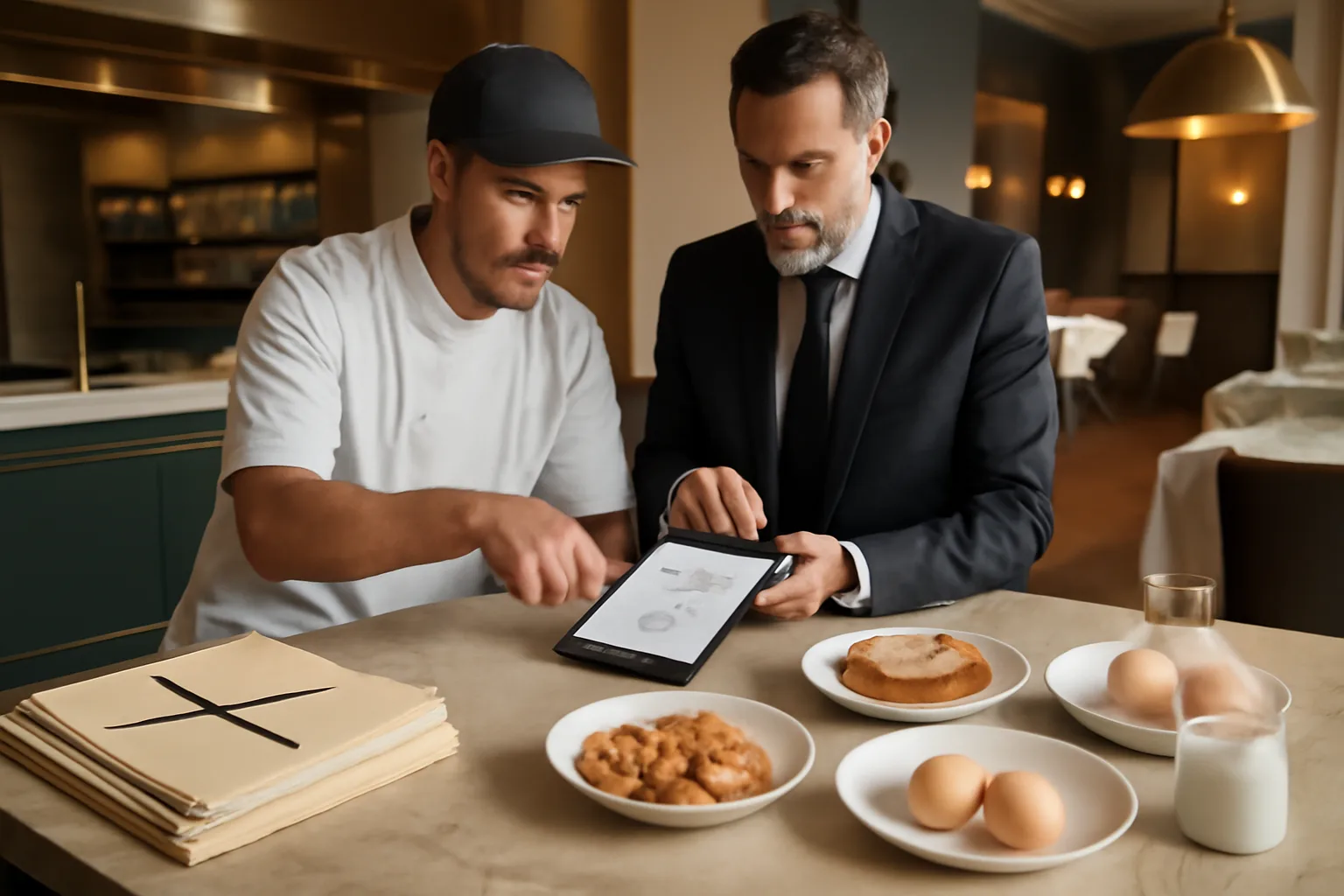
The allergens in digital menus obligations 2026 are not a theoretical issue or an administrative detail: they affect what the customer sees before ordering and the restaurant's actual ability to avoid mistakes. Just changing a sauce, a bread, or a topping and forgetting to update the menu can make the information outdated. In an environment where menus change daily, printed menus often lag behind; a well-managed QR menu, on the other hand, allows for keeping allergens up to date and reducing the risk of claims, inspections, or penalties.
What EU Regulation 1169/2011 Requires About Allergens in Catering
The starting point remains Regulation (EU) 1169/2011, which requires informing about the presence of certain substances or products that cause allergies or intolerances. Although the text was created with broad consumer food information in mind, its application in hospitality is clear: if you sell unpackaged food, you must be able to reliably inform about allergens before the purchase.
In 2026, there is no “digital exception” that allows relaxing this requirement. If the customer consults the offer on a website, a tablet, or a QR menu, the information still needs to be clear, accessible, updated, and consistent with the actual recipe. The obligation is not on paper: it is in the information that the consumer receives before deciding.
This implies two very practical things for any catering business:
- The menu must identify the allergens present in each dish or preparation.
- The internal system of the establishment must allow demonstrating where that information comes from and how it is updated.
The legal key is not the format, but reliability
A perfectly designed printed menu can be non-compliant if it is outdated. A simple digital menu can comply better if it reflects the current recipe, is corrected in real-time, and the staff knows how to use it. During an inspection, the critical question is usually: Did the information the customer saw match the dish served?
The 14 Mandatory Allergens You Must Declare
European regulations require informing about 14 groups of allergens. It is not enough to “guess” them or rely on the memory of the head chef. They must be consistently identified in all product sheets, recipes, and menu variations.
- Gluten-containing cereals
- Crustaceans
- Eggs
- Fish
- Peanuts
- Soybeans
- Milk
- Nuts
- Celery
- Mustard
- Sesame seeds
- Sulfur dioxide and sulfites
- Lupins
- Mollusks
In practice, the most frequent errors do not appear in the main dish, but in marinades, sauces, breads, broths, toppings, desserts, and side dishes. A dressing with mustard, a base with soy, or a decoration with nuts can turn a correct sheet into an incomplete one if the entire dish is not reviewed.
Realistic risk example: a burger “without relevant allergens” on a printed menu, but the brioche bun contains milk and eggs, the house sauce contains mustard, and the crispy onion uses gluten flour. That’s 4 undeclared allergens in a single dish for not reviewing auxiliary ingredients.
Allergens in Digital Menus Obligations 2026: How It Applies to QR
The QR menu is not a legal shortcut, but it is a very effective tool for better compliance. If the customer accesses the menu from their mobile, the information about allergens must be available before confirming the order, with good readability and without forcing them to navigate confusingly between multiple screens.
For a digital menu to truly comply in 2026, it is advisable to verify these points:
- Each dish displays its allergens visibly or is accessible with one click.
- The dish variants correctly share or modify allergens.
- Dishes not on the menu are also documented.
- The version the customer sees is the same one used by the internal team.
- There is an alternative procedure for customers who do not use QR.
If you want to see how a QR menu system designed for hospitality is structured, you can check the features of a digital menu for restaurants or a specific solution for allergen management.
What Inspections Value Most: Simple Traceability
A complex system is not necessary, but an orderly one is. If you change a croquette supplier at 11:00 and by 11:05 the QR correctly reflects milk, gluten, and eggs, you have significantly reduced the margin of error compared to a printed menu that will remain the same until the next reprint.
Why the Printed Menu Becomes Outdated Faster Than It Seems
Many restaurants believe they comply because they once designed an allergen table. The problem arises later: daily menus, suggestions, supplier changes, out-of-stock items, extras, and substitutions. The printed menu works well when the menu is very stable; when there is rotation, the paper starts to fail.
These are the most common mismatches:
- Only part of the menu is reprinted, leaving old versions on some tables.
- A waiter offers a suggestion not included in the allergen table.
- An ingredient is replaced due to stock shortages, and no one corrects the information.
- Adhesives, strikethroughs, or poorly legible handwritten notes are used.
Time Comparison: updating 25 dishes on a printed menu can take between 2 and 6 hours for review, design, printing, and distribution. In a well-structured QR menu, the same change can be made in 10 to 20 minutes, with immediate effect across all tables.
This time saving not only improves operations. It also reduces the period during which incorrect information circulates, which is precisely where much of the legal risk arises.
What a QR Menu Must Have to Comply and Reduce Penalties
Not just any PDF uploaded to the internet serves as a digital menu. If you are looking to reduce the risk of non-compliance, structure matters. An effective QR menu is not only attractive: it must convert kitchen changes into visible information for the customer without relying on patches.
A solid system should include, at a minimum:
- Editable dish sheets with allergen marking by recipe.
- Control of variants: size, side dish, sauce, topping, or bread.
- Centralized updates for dining room, delivery, and website.
- Quick access from mobile without downloading apps.
- History or internal procedure to know who changed what and when.
Additionally, if the business has multiple channels, it is advisable to connect the legal information of the menu with daily operations. In this sense, integrating the menu, orders, and processes with tools like operational connectivity or reviewing options for compliance and control helps avoid a situation where a data change in the kitchen does not reach the customer.
A Critical Detail: Temporary Dishes
Daily specials, event menus, Sunday brunch, or breakfast buffets are often the areas with the most errors. If they are not within the same system as the main menu, a “second menu” is created without allergen control.
Common Errors That Generate Health and Legal Risks
Most incidents do not stem from bad intentions but from a weak process. The restaurant thinks it “has it under control,” but the information depends on WhatsApp messages, notes in the kitchen, or team memory. That’s where the regulation stops being a formality and becomes real exposure.
The most frequent errors are:
- Marking allergens by dish category rather than by specific recipe.
- Not reviewing compound ingredients from the supplier.
- Forgetting extras and toppings in burgers, pokes, ice creams, or pizzas.
- Not updating menus after supplier changes or reformulations.
- Relying solely on the notice “consult the staff.”
Numerical Example: a venue with 40 dishes, 6 weekly suggestions, and 3 supplier changes per month can accumulate 20 to 30 review points monthly related to allergens. If the update is manual and on paper, it is easy for 2 or 3 changes to be left out of the menu.
When that happens, a well-managed digital menu wins for a simple reason: it concentrates the work in a single source of truth. That’s where platforms like iaMenu provide real value, not just by “digitizing” without more, but by helping ensure that the version visible to the customer is the current one.
How to Implement an Internal Allergen Review Process
Compliance does not only depend on having a QR. It depends on having a process. If the curry recipe changes tomorrow, someone must review the sheet, validate the change, and publish it before service. That flow must be short, clear, and repeatable.
A practical protocol for 2026 could be:
- Dish Registration: the kitchen defines ingredients and allergens.
- Validation: the dining room manager or management checks the sheet.
- Publication: the dish appears on the QR menu and internal channel.
- Ingredient Change: immediate update before service.
- Weekly Review: contrast between menu, purchases, and stock.
This approach is especially useful in restaurant groups, hotels, and businesses with buffets, where the number of references increases quickly. If you manage multiple concepts or services, you may find it helpful to review real use cases or compare solutions from the plans and costs.
Recommended Frequency
If the menu changes little, a weekly review may be sufficient. If there is a daily menu, buffet, or high rotation, it is advisable to review every recipe change and conduct a daily operational check of 5 to 10 minutes before service.
Digital Menu in Hotels, Buffets, and Events: The Most Sensitive Point
In hospitality and high-volume catering, the problem multiplies. A breakfast buffet can have 60 references among breads, cold cuts, pastries, hot dishes, toppings, and beverages. If halfway through the service you change a replenishment for another brand, the allergen profile can also change.
That’s why, in buffets and events, the digital menu or digital panel connected to a unique database offers a clear advantage over static signage. It does not eliminate the obligation to signal well, but it does allow for maintaining coherence between the kitchen, dining room, and point of consumption.
- Buffets: sheets by preparation and replenishment.
- Events: closed menus with confirmed allergens by version.
- Room service: menu synchronized with the kitchen and availability.
- Breakfasts: special attention to breads, dairy, nuts, and sauces.
Typical Scenario in a Hotel: 80 rooms, 1 buffet, 1 bar, and 1 room service. If each point uses different lists, just one unreplicated change can create 3 different versions of allergen information on the same day.
How a QR Menu Reduces Risk Compared to a Printed Menu
The big difference is not in the design but in the ability to react. When you change an ingredient, the printed menu takes time; the QR menu responds. And in terms of allergens, time matters. The faster you correct, the fewer tables receive outdated information.
These are the most concrete advantages:
- Immediate Update: the change reaches all tables at once.
- Fewer Versions Circulating: old menus or photocopies disappear.
- Greater Readability: the customer can enlarge text on their mobile.
- More Consistency: menu, website, and operation share the same base.
- Better Internal Audit: it is easier to review and correct.
If you are also considering a complete menu update, this resource on how to choose the best digital menu with AI in 2026 can help you compare options with practical criteria, not just aesthetic.
In summary: the digital menu does not replace the restaurant's responsibility, but it does provide a much more reliable tool to exercise it. And that, in terms of compliance, is worth more than a pretty reprint.
Frequently Asked Questions
These are the most common questions about allergens, QR menus, and compliance in 2026. If you are reviewing your operations, it is advisable to resolve them before the next menu update.
Does EU Regulation 1169/2011 require allergen information in digital menus as well?
Yes. If the restaurant provides information about dishes through a digital menu, QR, website, or tablet, the information about allergenic substances must still be clear, accessible, and verifiable before the purchase. The channel changes, but the legal obligation to inform does not disappear.
What 14 allergens must be identified in a digital menu?
The regulation requires informing about 14 groups: gluten-containing cereals, crustaceans, eggs, fish, peanuts, soybeans, milk, nuts, celery, mustard, sesame, sulfites, lupins, and mollusks. They must be marked when present as an ingredient or relevant derivative in the dish.
Does a QR menu legally replace a printed menu for informing allergens?
It can do so if the information is available before the order, is readable, is updated, and the customer can easily consult it. Additionally, the staff must know how to provide it if the customer does not use a mobile or needs clarifications.
What risk is there if a restaurant does not update the allergens of a dish?
The risk is twofold: health and sanctioning. An unreflected change, such as a sauce with mustard or a dessert with nuts, can cause a serious incident and lead to inspection, claim, or fine according to the applicable regulations.
Is it enough to put a general notice like 'consult the staff'?
Not always. That notice alone is usually insufficient if there is no reliable internal system, documentation of ingredients, and a clear procedure for responding accurately. The information must be useful, consistent, and traceable.
How often should allergens be reviewed in a digital menu?
It is advisable to review the information every time a recipe, supplier, side dish, sauce, or temporary product changes. In practice, many establishments set a weekly review and immediate validation after any kitchen change.
Does a digital menu reduce the risk of penalties compared to a printed menu?
Yes, because it allows correcting errors in minutes, centralizing changes for all tables, and preventing old versions from circulating. The printed menu tends to generate more risk when there are strikethroughs, partial reprints, or undocumented off-menu dishes.
What should a hotel or restaurant with a buffet do regarding allergens?
It must identify the allergens of each preparation or, at a minimum, provide an immediate and clear system to consult them before consumption. In buffets, breakfasts, and events, replenishment changes require special control because a product can vary during service.
How does a platform like iaMenu help comply with allergens in 2026?
It allows centralizing dish sheets, marking allergens by recipe, updating in real-time, and displaying the information on a QR menu without reprinting. Additionally, it facilitates that the kitchen, dining room, and management work from the same current version.
If your menu changes frequently, the risk is not in not having a design, but in not having control. A well-implemented digital solution helps you comply better, react faster, and document what you serve. If you want to review how to put this into practice, start by seeing how a QR menu prepared for allergens and compliance works.