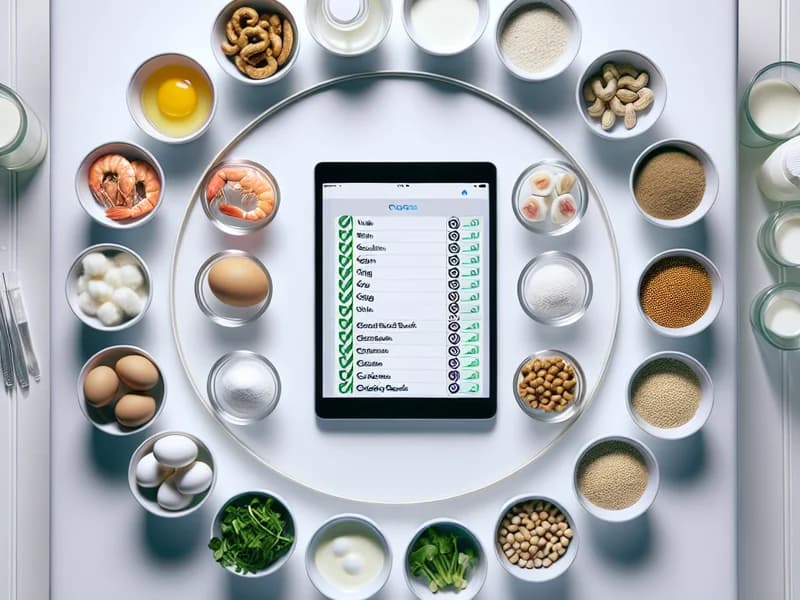
Review Allergen Information with AI Assistance
Super Chef suggests likely matches among the 14 regulated EU allergen categories. Your team reviews every result against the actual recipe, supplier information and cross-contact procedures.
Why restaurants need a reliable allergen-information workflow
Regulation (EU) No 1169/2011 requires information about substances or products listed in Annex II that are used in a food and remain present in the finished product. Article 44 covers non-prepacked food and allows Member States to set rules for how that information is made available.
A digital tool can help organise the workflow, but it cannot know an unwritten recipe change, a supplier reformulation or the cross-contact conditions in a particular kitchen. Those facts must come from the food business operator and its trained staff.
Super Chef analyses the menu information you provide and suggests likely allergen categories as a starting point. The operator verifies, corrects and approves the information before it reaches guests.
How Super Chef supports allergen review
Super Chef uses product and culinary context to suggest likely categories. An inference is not proof of the actual ingredients or cross-contact conditions.
Product analysis
When you create or edit a dish, Super Chef receives the product name, ingredient list, text, category (e.g. Pizzas) and subcategory (Classic). All this info is sent to the AI.
Deep food context
The AI uses the name, description and menu context to propose likely matches. For example, it may suggest cereals containing gluten for a pizza, but the kitchen must verify the actual flour, recipe and preparation.
Reviewable suggestions
Super Chef returns proposed allergen categories for review. Treat them as an editable draft, not as confirmed ingredient information.
Full chef control
You retain final control. Compare every suggestion with the recipe, supplier labels and cross-contact procedure; add or remove categories as needed. Reviewed manual edits are protected from later automatic overwrite.
Illustrative review: Pasta Carbonara
INPUT:
Name: Pasta Carbonara | items: bacon, egg, parmesan cheese, black pepper | Category: Pasta
OUTPUT:
Suggested categories to verify: CEREALS CONTAINING GLUTEN (pasta), EGGS (egg), MILK (parmesan)
The suggestions are plausible from the supplied description, but staff still verify the pasta, cheese, cured meat, supplier labels and preparation conditions.
The 14 required EU Allergens
Annex II to Regulation (EU) No 1169/2011 — categories Super Chef can suggest for review
Gluten
Wheat, barley, rye, oats, spelt, bread, pasta, beer, sauces
May suggest this for pizza, batter and béchamel; verify the ingredients
Crustaceans
Prawns, lobster, crab, crayfish, surimi
May suggest this for seafood paella, soup or prawn tempura
Eggs
Omelettes, mayonnaise, cakes, batter, fresh pasta
May suggest this for carbonara, batter, flan or custard
Fish
Cod, salmon, tuna, anchovies, Worcestershire sauce
May suggest this for cod croquettes or anchovy-based dressing
Peanuts
Peanut butter, satay, pad thai, snacks
May suggest this for satay or dishes described with peanuts
Soy
Soy sauce, tofu, tempeh, lecithin, vegetable protein
May suggest this for tofu, soy sauce or described soy ingredients
Milk
Milk, cheese, butter, cream, yoghurt, ice cream
May suggest this for gratins, dairy sauces, desserts or cheese
Tree nuts
Almonds, hazelnuts, walnuts, pistachios, cashews
May suggest this for named nuts, praline or some pesto recipes
Celery
Fresh celery, celery salt, vegetable stock, soups
May suggest this for celery, celery salt or described stocks
Mustard
Mustard, vinaigrette, curry, prepared sauces
May suggest this where mustard or a mustard-based sauce is described
Sesame
Sesame seeds, tahini, hummus, burger buns
May suggest this for sesame seeds, tahini or described sesame products
Sulphites
Wine, vinegar, dried fruits, preserves, beers
May suggest this where wine or another sulphite source is described
Lupin
Lupin flour, snacks, gluten-free products
May suggest this only when lupin or lupin flour is indicated
Molluscs
Mussels, clams, octopus, squid, oysters
May suggest this where mussels, clams, squid or other molluscs are described
Regulation (EU) No 1169/2011 and operator responsibility
Regulation (EU) No 1169/2011 requires consumers to be informed about the presence of substances or products causing allergies or intolerances listed in Annex II. The requirement also covers non-prepacked food under Article 44.
Member States can define how allergen information for non-prepacked food must be made available. Restaurants should check the national rules and current guidance that apply where they operate.
IAMenu organises information supplied and verified by the food business operator. It is not legal advice, a laboratory test, a substitute for supplier documentation or a guarantee of compliance.
Super Chef adds an AI-assisted suggestion layer to your review process. Trained staff remain responsible for checking every dish and updating the published information whenever recipes, suppliers or preparation conditions change.
Illustrative review workflows
Pizzeria with 45 products
A pizzeria asks Super Chef for suggestions across its products. The chef reviews each pizza against the dough, toppings, supplier labels and cross-contact procedures, then approves or corrects the categories shown to guests.
One documented suggestion-and-review workflow across the menu
Coeliac customer filtering allergens
A guest can use the menu filter to hide dishes marked with cereals containing gluten. The result depends entirely on complete, current information verified by the operator and must not be described as a guarantee that a dish is safe from cross-contact.
A clearer browsing aid based on operator-verified menu data
Team reviews a recipe change
A supplier reformulates an ingredient. The team checks the new label, updates the affected dishes and republishes the verified information instead of relying on an earlier AI suggestion.
Published information follows the current recipe and supplier evidence
Super Chef in numbers
Reviewable
AI suggestions
Editable starting points based on the product information supplied
14
EU categories supported
The 14 categories listed in Annex II to Regulation (EU) No 1169/2011
Human
Final verification
Recipes, supplier evidence and cross-contact require trained staff review
Protected
Reviewed corrections
Approved manual edits are not overwritten by a later automatic analysis
Frequently asked questions about AI allergen scan
Which allergen categories can Super Chef suggest?+
Super Chef can suggest the 14 categories listed in Annex II to Regulation (EU) No 1169/2011: cereals containing gluten, crustaceans, eggs, fish, peanuts, soybeans, milk, nuts, celery, mustard, sesame, sulphur dioxide and sulphites, lupin and molluscs. Staff must verify whether each category actually applies.
Can I edit or correct the allergen suggestions?+
Yes. Remove a suggestion that does not apply and add any category the AI missed after checking the recipe and evidence. Reviewed manual edits are protected so a later automatic analysis does not overwrite them.
Is it compliant with European allergen rules?+
No software can guarantee compliance from a dish name or description. Super Chef supports review of the 14 Annex II categories, while the food business operator remains responsible for accurate information and for following the national rules that apply to non-prepacked food.
How does context-aware scan work?+
Unlike keyword-based systems, Super Chef uses GPT with food context. This means that if your product is in the Pizzas category, the AI knows it very likely contains gluten from the dough, even if you did not write it in the items. Similarly, it infers milk in gratins, eggs in battered dishes, and sulphites in dishes with wine.
What happens if I change a dish's items?+
A product change can trigger a new analysis, but a recipe or supplier change must also be verified by staff. Reviewed manual markings are protected from automatic overwrite.
Does it work with menus in other languages?+
IAMenu has a 54-language catalog, with 2, 4 or 8 active languages depending on plan. AI can analyse supported-language product text, but operators must review both the allergen information and its translation before publishing.
How much does allergen scan cost?+
Allergen tools are included in every paid IAMenu plan and in the 14-day no-card trial, which unlocks every feature. IAMenu has no free plan; check the pricing page for current limits and feature flags.
Can guests filter the menu by allergens?+
Yes. Guests can filter dishes using the allergen data published by the restaurant. This is a browsing aid, not a guarantee that remaining dishes are safe from undeclared ingredients or cross-contact.
Add AI assistance to your allergen review workflow
Start a 14-day trial with everything unlocked and no credit card. Generate suggestions, verify them with your team and publish approved information.
Start 14-Day Trial