Multilingual Restaurant Software: Panel in 6 Languages
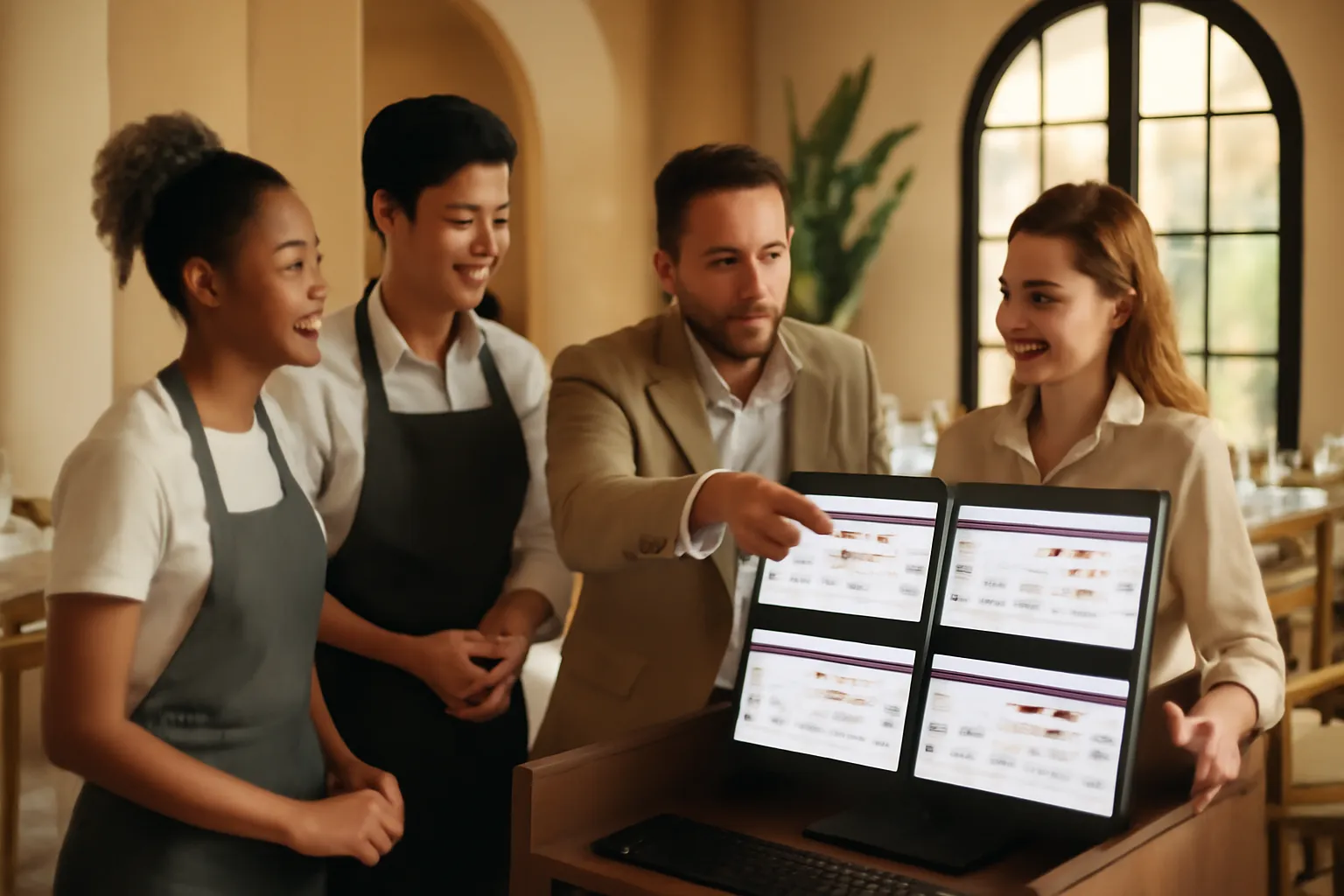
If your team speaks different languages, managing day-to-day operations can become slower than necessary. Changing dishes, reviewing texts, updating information, or coordinating openings between various locations shouldn't depend on everyone understanding the same language. With this multilingual restaurant software, the management panel now also speaks your team's language: Spanish, English, French, German, Italian, and Portuguese.
What it means to have true multilingual restaurant software
Until now, many restaurants addressed the visible part for the customer, such as the menu in multiple languages, but continued to work internally with a single language in the management tool. This forces mental translation at every step, asking colleagues for help, or leaving certain tasks solely in the hands of a specific person.
Starting today, the restaurant panel is also available in 6 languages. This means that the person updating the menu, reviewing allergens, changing hours, or preparing a new service can do so in an environment that is clearer and more natural for them.
It's not just a visual improvement. It's a more practical way to work when there are international teams, temporary staff, hotels with mixed teams, or chains operating in different markets. If you already use features like digital menu management, now the internal experience also better matches the real pace of the business.
The important thing in one sentence
Your team no longer has to adapt to the language of the tool. The tool adapts to the team's language.
The 6 languages available in your panel
The panel can now be used in these 6 languages:
- Spanish
- English
- French
- German
- Italian
- Portuguese
This is especially useful in businesses where operations frequently change hands: a floor manager who speaks Spanish, a marketing manager working in English, a hotel director reviewing in French, or a kitchen team with international profiles.
Each person understands better what they are doing, needs less time to get oriented, and can perform everyday tasks with more confidence. In operations where multiple profiles interact with the menu, the difference is quickly noticeable.
How it works in the daily life of the restaurant
The main advantage is not in a single major action, but in dozens of small tasks repeated each week. When the panel is in the language each person dominates, everything flows better: options are understood more quickly, changes are reviewed better, and fewer errors occur due to interpretation.
Think of common actions like these:
- Update a seasonal menu.
- Modify dish descriptions.
- Review important information before publishing changes.
- Coordinate openings between various locations or departments.
- Grant access to new team members without halting operations.
If you also work with sensitive customer information, such as ingredients or intolerances, a clearer environment also helps to review with more peace of mind. You can see how it fits with other functions in allergen management.
Before: one person “translates” the panel for the rest of the team and concentrates important changes.
Now: more team members can work autonomously in their own language, with less internal dependency.
What the restaurant gains from this change
The improvement is not just convenience. It has a direct impact on how the business operates. When the panel is better understood, daily management becomes more agile and organized.
- Fewer internal doubts: each person better identifies what they need to do.
- Fewer avoidable errors: confusion is reduced when handling content and daily adjustments.
- More speed: updating information takes less time.
- Better onboarding of staff: new team members start working more smoothly sooner.
- More scalability: useful for businesses with multiple points of sale, hotels, or groups.
For hotels and chains, the benefit is even clearer. In these environments, there is often staff from different nationalities, shift changes, and coordination between departments. A multilingual panel helps everyone work from the same base without unnecessary barriers.
If your operations include various spaces, brands, or types of service, this new feature fits very well with scenarios like those shown in real use cases.
A concrete example: hotel with international staff
Imagine a hotel with a restaurant, bar, and breakfast service. Management reviews menu changes, reception answers guest questions, the floor staff needs to confirm visible information, and marketing updates promotions according to the season. If each profile works better in a different language, a single panel in one language ends up creating bottlenecks.
With the panel available in 6 languages, the work is distributed better. Each area can enter, review, and manage with more confidence. This avoids having to wait for “the person who understands the tool” for every simple change.
Additionally, if you already connect different parts of your operations, this improvement adds value because it makes daily use easier for the team. You can discover more about integrations and workflow in how to connect your operations.
Ideal for international teams
This new feature is designed for businesses where the team's language doesn't always match. Hotels, chains, franchises, and restaurants with international staff are the ones that notice the change from the very first use.
Frequently asked questions
Here are quick answers to the most common questions about the new multilingual panel for restaurants.
What languages are available in the restaurant panel?
The restaurant panel is now available in 6 languages: Spanish, English, French, German, Italian, and Portuguese.
Does the language change affect the menu that the customer sees?
No. This new feature refers to the management panel used by your team. The digital menu for customers can continue to operate with its own languages and settings.
For what type of businesses is multilingual restaurant software most useful?
It is especially useful for hotels, restaurant groups, franchises, and restaurants with international staff or team rotation.
Do I need to configure anything technical to use the panel in another language?
No. The change is designed to be simple, so each user can work in an available language without complicated processes.
What practical advantage does having the panel in the team's language provide?
It helps to work faster, reduces doubts when managing content, and avoids everyday errors, especially when multiple people use the panel.
If you're looking for a clearer way to manage your operations with an international team, you can now discover everything our restaurant software has to offer.