Digital Menu Analytics: Discover What Your Customers Look At
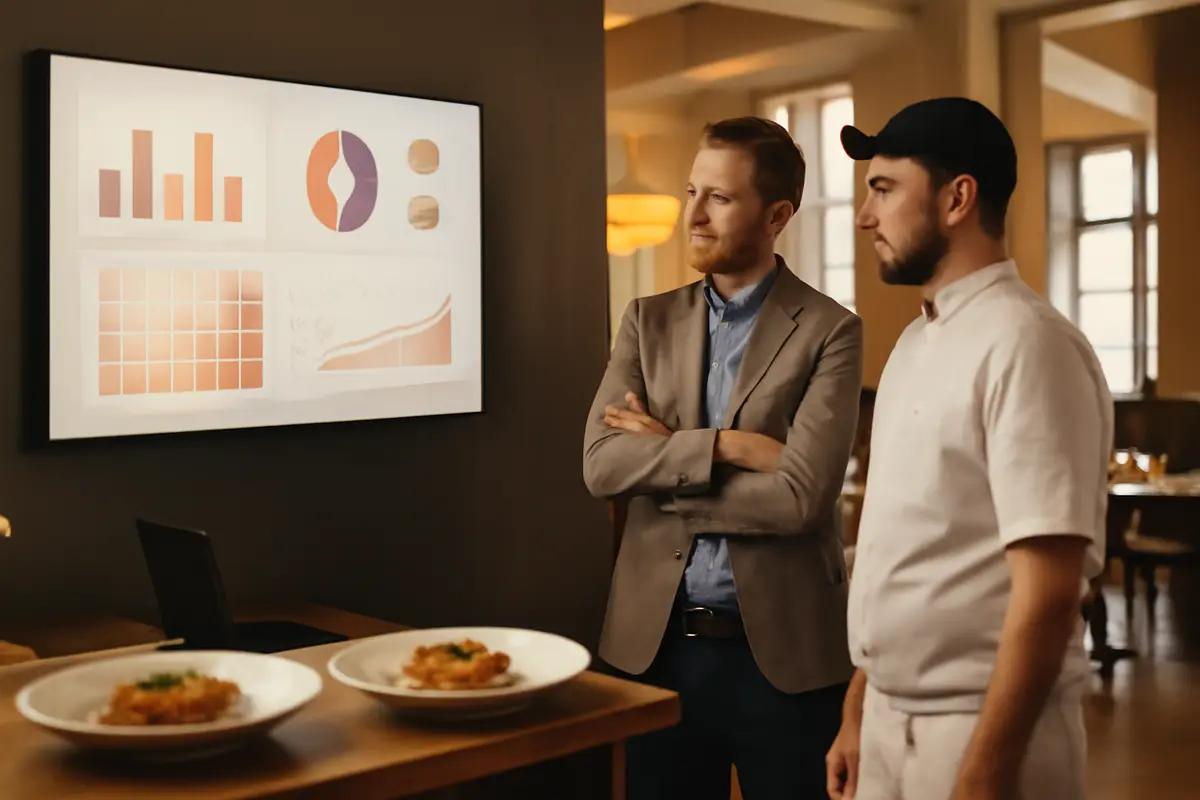
Many restaurants change their menu based on intuition: they move dishes around, highlight suggestions, or tweak categories without really knowing what the customer is looking at. With digital menu analytics, you can see what truly interests people on your menu, when activity is highest, and which devices they use to access it. This way, you stop guessing and start making decisions based on real information.
What is digital menu analytics?
Digital menu analytics helps you understand your customers’ behavior when they open your menu. It is not just about knowing whether they scan the QR code, but also discovering which dishes they look at most, which sections generate the most interest, and which hours see the most visits.
This gives you a much more useful picture of your menu’s performance. For example, you can identify whether a category receives many visits but few clicks on its dishes, whether a recommendation goes unnoticed, or whether certain products attract more interest at specific times of day.
If you already use a digital menu for your restaurant, this information turns your menu into a business tool, not just an attractive way to showcase dishes.
Make decisions with data, not just gut feelings
A dish may seem very important to your team, but if it receives hardly any attention on the menu, it is worth reviewing. And the opposite is also true: if an option attracts a lot of attention, it may deserve a better position, a better photo, or more prominence.
Seeing real interest before changing your menu helps you avoid making decisions blindly.
What you can see with digital menu analytics
The information is designed to answer very practical day-to-day questions. You do not need to interpret complicated reports: you can clearly see what is happening on your menu and where it makes sense to take action.
- Most-viewed dishes: discover which options attract the most interest.
- Most-visited categories: starters, drinks, desserts, daily specials, or any other section of your menu.
- Busiest hours: identify when your customers check the menu most often.
- Device type: understand whether most visits come from mobile devices or other formats.
- Attention trends: identify which products are gaining or losing prominence.
With this data, you can make very specific decisions. For example: move a signature dish to the top of a category, simplify a section that generates little interest, or give more visibility to a profitable drink during the hours when your menu receives the most visits.
It is also useful when working on the informational side of your menu, such as allergens or key product details. If you want to strengthen this area, you can combine it with solutions such as allergen management to offer customers a clearer experience.
How it works in the restaurant’s day-to-day operations
The goal is not to give you more work, but to help you review your menu more thoughtfully. Instead of making broad changes every so often, you can now see what is happening and act on what really makes a difference.
A typical use case might look like this:
- Review which dishes received the most visits this week.
- Check which categories attract the most attention.
- Look for time slots with more menu visits.
- Decide what to highlight more effectively on the cover or within the section.
- Identify dishes that receive hardly any attention and need to be reconsidered.
This means you no longer have to rely only on thoughts like “I would say this dish is popular” or “I feel like this section performs worse.” Now you can confirm whether that impression is accurate.
A simple example
Imagine that your burgers receive many visits, but one of the premium options is hardly viewed. Instead of removing it straight away, you could try moving it higher up, improving its presentation, or giving it more prominence during dinner hours.
If you then see more interest, you know the problem was not the dish itself, but its visibility on the menu.
What your restaurant gains from this information
The main advantage is simple: you can manage your menu more effectively. And a better-managed menu helps you sell more, organize your offering more clearly, and identify opportunities that previously went unnoticed.
- More clarity when making decisions: know what to highlight and what to review.
- Fewer pointless changes: act on data instead of assumptions.
- Better visibility for key dishes: give prominence to what interests customers.
- Menu optimization: understand which sections perform best.
- More control over performance: turn your menu into a sales tool.
This is especially useful if you have an extensive menu, several product categories, or different service periods. What customers look at at lunchtime is not necessarily what they check at night, and what attracts attention in drinks may differ from what attracts attention in desserts.
If you also connect your operations with other business tools, you can use restaurant integrations to gain an increasingly useful view of what happens between your menu, service, and sales.
A specific example: before and after using menu data
Before, a restaurant might think its salads were not performing because they sold poorly. After reviewing the analytics, it discovers that the real problem is that the category is too far down the menu and receives hardly any visits. The conclusion changes completely.
In another case, a dessert section may receive many visits late in the evening, suggesting a clear opportunity to better highlight the most profitable products at that time. Or a drink with a good margin may be viewed frequently, indicating that it deserves stronger visual support or a better description.
The difference is that you can now identify these patterns before changing prices, removing dishes, or redesigning the entire menu. This saves time and helps you avoid rushed decisions.
A menu that keeps improving
Your menu does not have to be reviewed only once a season. With analytics, you can make small, ongoing adjustments: move, highlight, reorder, and learn.
This ongoing process is often more profitable than making major changes without a clear foundation.
Frequently asked questions
If you are considering how to make the most of this feature in your restaurant, here are clear answers to the most common questions about digital menu analytics.
What can I see with digital menu analytics?
You can see which dishes and categories receive the most visits, what times customers check your menu most often, and which types of devices they use to access it. This helps you understand what attracts interest before deciding what to change.
How can this analytics feature help a restaurant?
It helps you make clearer decisions about what to highlight, what to reposition, and which dishes to review. Instead of relying only on day-to-day impressions, you can work with real behavioral data.
Can digital menu analytics help me sell more?
Yes, because it allows you to give more visibility to dishes with potential, identify options that go unnoticed, and organize your menu more effectively. A better-presented menu usually makes decisions easier and can improve sales.
Can I find out what times customers check the menu most often?
Yes. You can identify the times of day when your digital menu receives the most activity and adapt featured items, promotions, or priorities according to the time slot.
Do I need technical knowledge to use this feature?
No. The information is designed so that any restaurant can understand it at a glance and take action without complications.
If you want to turn your menu into a more useful tool for selling more and making data-driven decisions, discover everything you can already do with our restaurant features.